

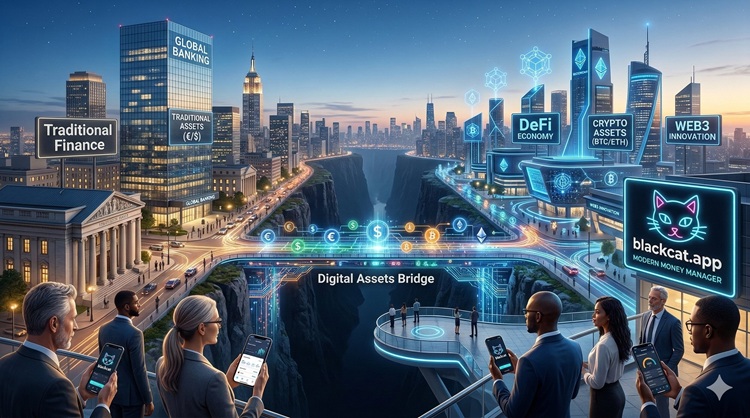
The evolution of corporate finance has reached a fascinating crossroads in 2026. For years, the divide between “Traditional Finance” (TradFi) and the “Decentralized” world (DeFi) felt like a chasm that required a specialized guide and a fair amount of risk appetite to cross. However, as we navigate the mid-2020s, that chasm has effectively closed. What remains is a unified landscape where digital assets are no longer “alternatives”—they are simply another line item in a modernized treasury.
Table of Contents
The Infrastructure Pivot: Why “Hybrid” is the New Standard
For the modern business owner or freelancer, the friction of the early 2020s—waiting three days for a SEPA transfer to clear or dealing with the “black box” of international currency exchanges—is increasingly unacceptable. The market has shifted toward integrated ecosystems that treat fiat and digital assets as two sides of the same coin.
The primary driver here isn’t just a love for technology; it’s a cold, hard look at operational efficiency. In 2026, a business that can settle a cross-border invoice in USDT in seconds, while simultaneously managing a European IBAN for standard utility payments, has a massive liquidity advantage. This “hybrid” approach allows for:
- Instant Settlement: Bypassing the T+2 settlement cycle that has plagued international trade for decades.
- Reduced Intermediary Costs: Every hop a dollar makes through a correspondent bank is a fee; on-chain rails remove those toll booths.
- Simplified Reporting: Modern apps now provide unified dashboards that aggregate crypto holdings alongside fiat balances, making the auditor’s job significantly less of a headache.
Regulatory Clarity: The CFO’s Green Light
A major catalyst for this shift was the wave of regulatory frameworks that solidified in late 2025. With the implementation of comprehensive digital asset acts across major jurisdictions, the “wild west” narrative has been replaced by institutional-grade compliance.
CFOs are no longer asking if they should interact with digital assets, but rather which interface offers the most robust security. The trend is moving away from purely speculative exchanges toward “money manager” applications that provide a secure bridge. These platforms, often categorized under the umbrella of blackcat crypto solutions, prioritize the user’s ability to switch between Euro-denominated IBANs and major cryptocurrencies like BTC or ETH within a single, regulated environment.
The Rise of the “Personal Money Manager” for Professionals
In the current economy, the line between personal and professional expenses is often blurred, especially for the growing class of “solopreneurs” and digital nomads. The most successful financial tools in 2026 are those that offer “multi-personality” accounts.
Imagine a scenario where a journalist based in Tel Aviv or a developer in Berlin can order separate Mastercards for different spending categories—one for travel, one for equipment, and one for daily living—all pulling from a unified pool of assets that includes both fiat and stablecoins. This level of granularity in expense management was once the domain of enterprise-level ERP systems; now, it’s available on a smartphone.
The Role of Incentives in a Digital Economy
We’ve also seen a shift in how these financial tools attract users. In 2024, “cashback” was a simple perk. In 2026, it’s a sophisticated yield strategy. Many modern payment apps now offer rewards on account balances or specific merchant categories (like Amazon or grocery chains) that rival traditional high-yield savings accounts. When you combine a 4% p.a. reward with the ability to instantly pivot into a crypto position during a market dip, the value proposition for the business-minded individual becomes undeniable.
Looking Toward 2027: AI Agents and Autonomous Finance
As we look at the next eighteen months, the integration of AI “agents” into these financial ecosystems is the next logical step. We are already seeing prototypes of autonomous wallets that can rebalance a portfolio or pay a recurring invoice based on the most cost-effective gas fees at that moment.
The foundation for this future is being built today by platforms that emphasize blackcat crypto integration alongside traditional banking features. By establishing a “hub” that handles the complexity of the underlying rails—whether it’s SEPA, Mastercard’s network, or the Ethereum blockchain—these tools allow business leaders to focus on growth rather than the plumbing of their payments.
Final Thoughts
The “crypto vs. banks” war ended in a stalemate that benefitted the consumer: they merged. For any business looking to remain competitive, the goal is no longer to “pick a side,” but to adopt a platform that speaks both languages fluently. The future of business finance is integrated, instant, and increasingly invisible.