

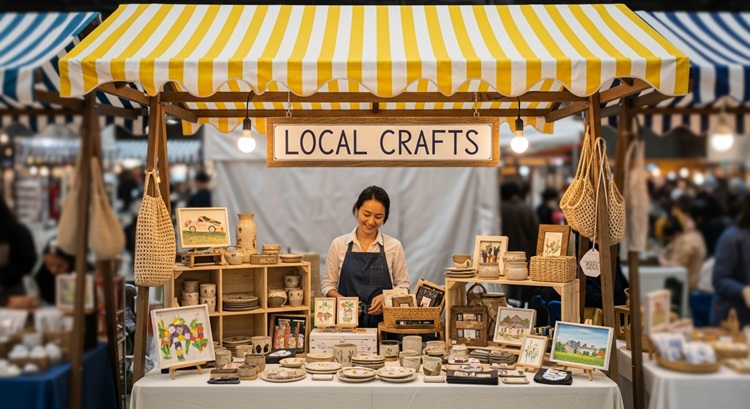
With a 10×10 space at a trade show, you cannot mask a poor strategy with size. Everything you do works, or it doesn’t. With that said, it can be a positive if you know how to leverage it.
Table of Contents
Define one focal point and defend it
When you have only one product to promote, it’s easy to execute a booth in adoration of a single product. It is more challenging when you have several products you want attention on. The tendency (mistake) is to cram everything into the booth hoping something speaks to each attendee.
A single hero can be a product that would otherwise suffer from overcrowding. It could be a focal point the other products orbit. This product is no more valuable than any other, but as sometimes happens, it’s less known, newer, or harder to demonstrate. Giving it the spotlight within a simple environment can elevate its visibility and perceived value. You don’t need to put 15 conversions on an invoice. Tell them you’re testing how each one performs.
Build upward before you go outward
Your footprint – the space your booth occupies – is fixed. Your reach, the area you can effectively influence, generally isn’t. Within the rules of the trade show, you can leverage space above your booth to create significant impact beyond your immediate vicinity. Tension fabric prints, backlit by LEDs in a tall, minimalist frame, attract the eye and attention more than any square foot of floor print can. Your booth probably doesn’t allow much vertical space. Use all you can. This will show over the neighboring clutter of a hectic trade show floor.
Design the hardware to work for you
A great trade show booth has to do a lot of heavy lifting, regardless of its size. In the case of a small booth, it has to carry even more structural weight than a large one. There’s no back room, storage, or easy out if an attendee wants to roll out the tough questions. The counter that greets visitors also has to be the place where you store the bulk of your literature – literature that must be out of sight. The same small counter also has to serve as inconspicuous real estate for your lead capture technology. The booth’s floor represents your first opportunity to define your space. It has to make a clear, visual statement to the attendees that they are entering your domain. And finally, the structural frame has to assemble in a matter of hours, transport relatively compactly, look amazing, and support tension fabric graphics without any visible wrinkles.
This is where the quality of your exhibit components becomes a competitive differentiator. Partnering with a leading trade show exhibit manufacturer gives you access to modular systems engineered to solve exactly these problems – hardware that looks custom without requiring custom budgets, and configurations flexible enough to work at multiple show footprints.
Use your senses before you use your square feet
Audio and scent do not occupy physical space. Targeted sound showers – directional speakers that establish an audio zone that can only be heard within your booth – help you manage the environment without interfering with neighboring exhibitors. A signature scent, when used subtly, serves as a sensory anchor for your guests – one they may not notice but will subtly associate with your presence.
Flush, mounted monitors or tablets on the display framework can provide your whole product catalog, a demo reel, or a configuration tool while taking up no physical product space. This keeps the air open but still communicates range and depth.
Traffic flow is a design decision, not an afterthought. A greeter counter placed slightly right of center rather than across the opening will invite people in rather than stopping them at the door. Minimalist perch seating or standing-height tables along one side keeps conversations happening without blocking sightlines into the space.
The psychology of the “small” booth
In a small space, you should change how you think about design entirely. The booth’s job isn’t to replace conversation – it’s to create the conditions where conversation happens naturally.
A well-designed small booth positions your staff as the focal point, not a supplement to a large display. Attendees who are overloaded from a full day on a loud show floor often respond better to a contained, calm environment that clearly communicates one thing than to a sprawling display that asks them to do too much work.
Small doesn’t mean limited. It means focused. And a focused booth, built with the right structure and a clear brand narrative, tends to be the one people actually remember.